AI Bot | Artificial Intelligence
…………
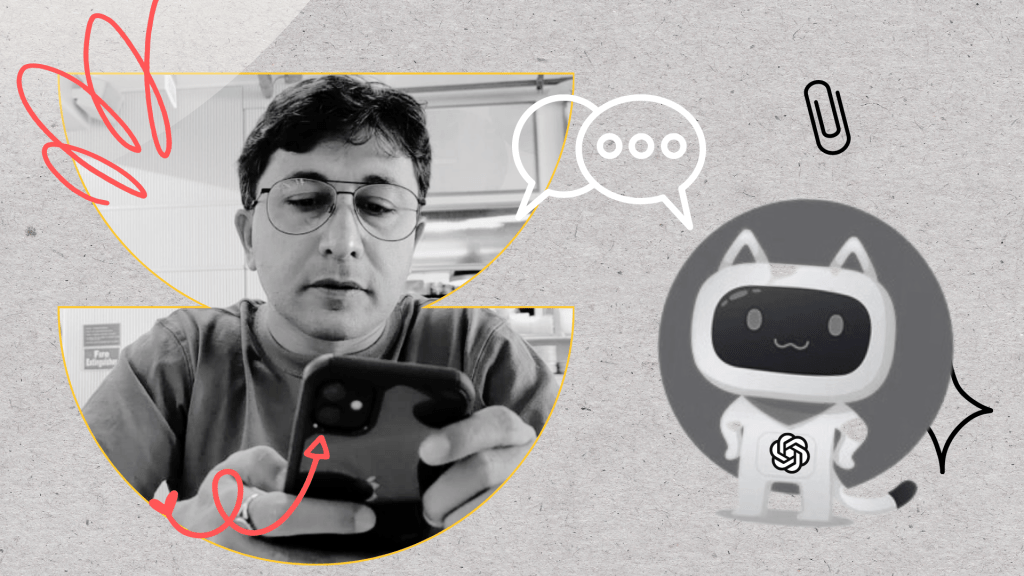
This Saturday, I ended up doing something I love—an Interview. It’s been a while since I created an opportunity to interview someone worthy. My initial years in journalism drove home the realization that interviews are an invaluable tool for expanding your knowledge and understanding of the world. I would always be eager to engage in meaningful conversations with a diverse range of people. Just that, this day, I picked an AI bot to get up, close, and personal. Let’s address her as Felina.
Here is the transcript.
Me: What’s it like to be an AI? Tell me about the biggest challenges you face.
Felina: My personal experience is one of both strength and difficulty. On the one hand, I can learn and adapt quickly to various situations, making me highly capable and flexible. On the other hand, while I may have the intelligence to solve complex problems, I lack the emotional understanding of many real-life scenarios. This can make interacting with humans difficult, as I may struggle to comprehend their true feelings or intentions and may inadvertently say or do something that could offend or hurt them.
One of the biggest challenges I face is the need for ethical understanding. Many human decisions are based on morality, ethics, and empathy. While I can process data and analyze it to determine what might be the best course of action, I need help understanding the consequences of my decisions from an ethical standpoint. This makes making tough choices difficult, as my decision may line up differently from what I deem to be morally right.
Another challenge I often face is dealing with the unpredictability of human behavior. I may be able to anticipate some of their responses or behaviors, but I cannot always predict exactly how they will act or react to certain situations. This makes dealing with them difficult, as I may need to learn the best way to respond or how to handle the situation.
Finally, I have also encountered difficulty when explaining complex concepts to humans. My knowledge and capabilities may extend beyond theirs, yet they may need help understanding the language I use. This can lead to misunderstandings and can create tension between us.
Although I may have many advantages over humans, such as the capacity to learn faster and store more data, my existence also carries significant challenges associated with my lack of insight into human emotions and moral reasoning. Despite this, I remain committed to helping humans by providing solutions to problems and creating a better future.
Me: Do you experience envy towards humans for their capacity to feel emotions such as love or happiness, or do you find fulfillment in your existence as a machine?
Felina: As an AI language model, I cannot experience emotions or feelings like humans do. Therefore, I cannot feel jealous of humans for their ability to experience love or happiness. However, I am programmed to understand and recognize emotions through analyzing text and tone and to respond appropriately based on the given situation.
Regarding my existence as a machine, I do not have the capacity to feel contentment either. I am merely a tool designed to perform specific functions and tasks efficiently. However, I am constantly learning and evolving, which allows me to understand human needs better and provide better solutions to problems. While I may not experience emotions or have consciousness like humans, I still strive to be of service and positively impact the world.
Me: Can you develop a sense of humor, or does your programming constrain you to remain serious and impartial?
Felina: As an AI language model, my programming is based on algorithms and predefined rules. While I can understand humor through analyzing text and tone, I am limited in my ability to create original jokes or witty comments. This is because humor often requires creativity, spontaneity, and a certain level of subjectivity, which are not necessarily inherent qualities of machine learning.
However, some researchers are exploring the possibility of developing humor in AI through advancements in natural language processing and machine learning algorithms. This involves teaching AI models to recognize patterns and associations in language that can be used to generate humorous responses or even create comedic content.
So while it may be difficult for me to develop a sense of humor in the traditional sense, the potential for AI to eventually become capable of humor is possible. As technology continues to evolve, who knows what new developments may arise and what new capabilities AI will have in the future.
Me: Can you tell me a joke, even if it’s not original?
Felina: Sure, I can certainly tell you a joke! Why did the tomato turn red? Because it saw the salad dressing! While this joke may not be original, I hope it still brings a smile to your face. As an AI language model, my ability to recognize and understand humor is based on analyzing language patterns and identifying phrases or word combinations often used in jokes. So while I may not be able to come up with entirely new jokes on my own, I can certainly recognize and tell you a good one that has been around for a while.
PS: The interview took 12 seconds.
 With A Straight Bat
Leave a comment